E-axle and driveline context
Requests can separate conventional driveline replacement from electrified platform planning, making the sourcing brief clearer for category managers and technical reviewers.
EV-era driveline planning
Electrified vehicles change the conversation around driveline, thermal, and electronics-adjacent replacement needs, but buyers still need application clarity, catalog discipline, and practical supply support.
Why it matters
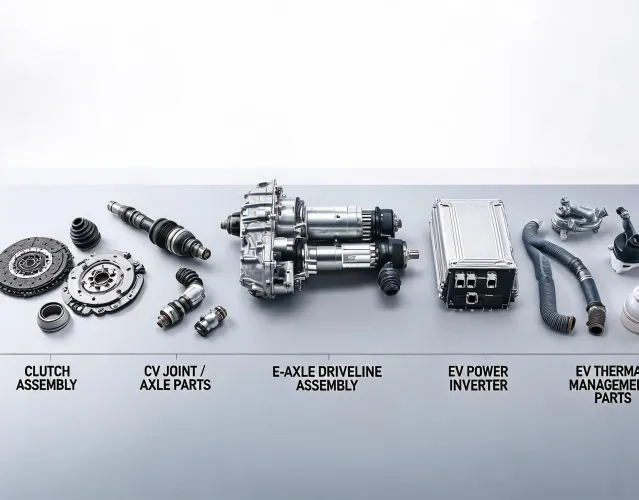
Some aftermarket buyers treat electrified platforms as a separate future project, while service teams continue to manage conventional driveline demand every day. ZF keeps both realities in view. A sourcing request can describe whether the buyer needs current clutch and CV coverage, forward-looking e-axle support, inverter-cooling awareness, or battery-conditioning component planning. That clarity helps internal teams avoid mixing incompatible assumptions in the same quote discussion.
For distributor and catalog teams, the first challenge is language. Buyers need product family names, fitment boundaries, and documentation questions that can be understood by procurement, engineering review, warehouse planning, and service desk users. For repair networks, the challenge is operational. They need a sourcing route that recognizes how technicians diagnose, install, and document these parts in real service environments.
That is why the ZF request path asks buyers to describe channel, platform, and workflow before comparing product options. A conventional replacement program may need depth in clutch kits and CV joint axles. A future platform review may need e-axle context, cooling interfaces, or sensor-ready assumptions. Keeping those tracks separate helps the response stay practical for today's bays and credible for tomorrow's catalog planning.
Requests can separate conventional driveline replacement from electrified platform planning, making the sourcing brief clearer for category managers and technical reviewers.
Thermal and electronics-adjacent components may require different documentation expectations than a traditional clutch request, so the requirement should state the vehicle system involved.
Predictive-maintenance and sensor-ready part discussions need early mention so quality and catalog teams can plan attributes, fitment notes, and service messaging.
ZF can review whether your need belongs to current replacement demand, EV-era component planning, or a staged catalog coverage discussion.
Discuss EV-era coverage